A fall series on the science of eating well, one piece at a time. New posts every two weeks through December.
Let's start with a car
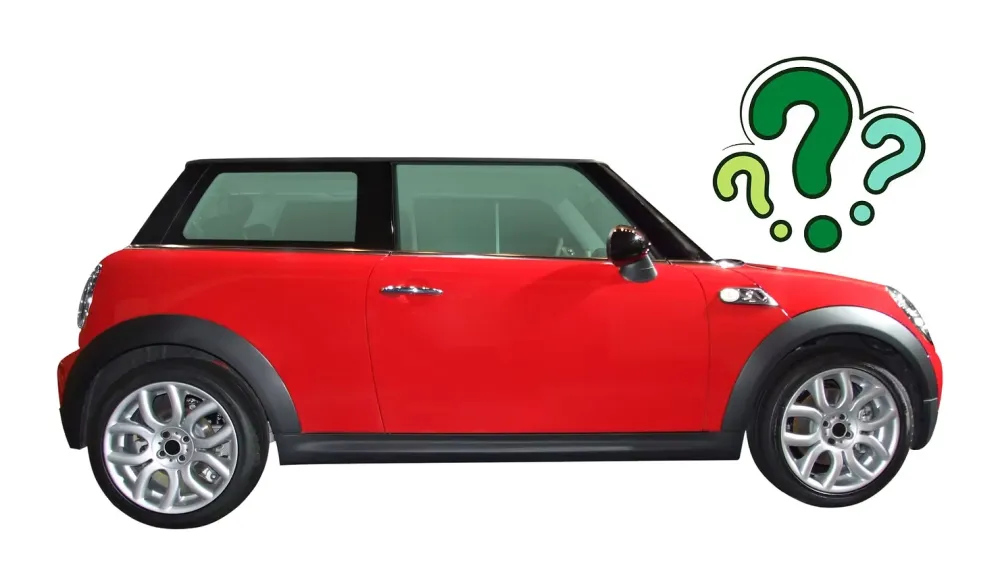
Picture this: a bright red Mini Cooper with two doors and black trim around the wheels and windows.
Now, quick, I need you to make a decision. It's important:
Is this a good car? Should I buy it?
You might be saying to yourself right now, "I don't know, Chelsea! It depends!"
Which would be right, of course. How could you possibly know if this car is good or not just by looking at it, without any information about what it's for?
What if I need to haul a family of six? Not ideal. But if I want a fun weekend car to drive around the island with my husband, it might be perfect.
The same car could be "bad" in one case and "perfect" in another.
We instinctively know that we can't just label a car as good or bad. Instead, we decide whether it's good for the intended purpose.
A pickup truck is great for hauling construction supplies, but not great for carrying more than five people (safely). A van is ideal for transporting kids and their gear, but not for off-roading or driving through a flooded road. (Unfortunately, I know that last one from experience!)
But I noticed something strange. We don't apply this same thinking to food.
That's where we're starting Back to the Plate, our new nutrition series. Over the next few months, we'll dig into fiber, protein, fat, and vitamins, and I'll share the science I lean on when I'm feeding my own family and coaching clients. But before we zoom in on any one nutrient, we need a better question than "Is this food good or bad?"
The trap of "good" vs. "bad" foods
When it comes to food, we're often taught that everything needs a moral label. Good or bad. Clean or dirty. Healthy or unhealthy.
There are endless lists, and even entire apps, designed to rank or color-code our food choices. Because of all this confusion, one of the most common questions I get from my clients is:
"Can I eat this food? Is it good or bad?"
Just like with cars, the real answer is:
It depends.
Three questions to ask instead
Instead of sorting food into "good" and "bad" boxes, I like to picture it on a spectrum: a healthiness scale.
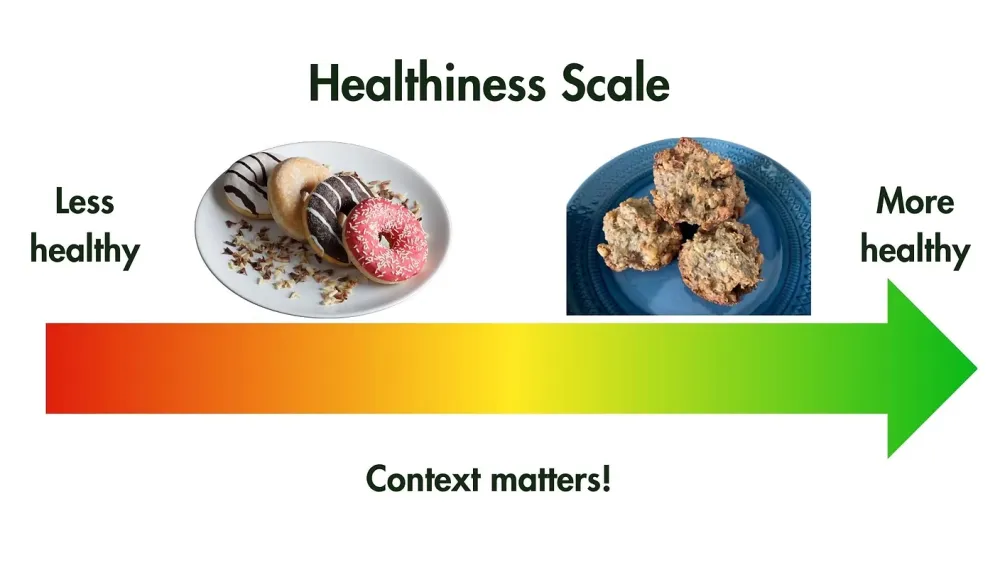
There's no "good" end or "bad" end, just a sliding scale. And where a food lands on that scale can change depending on three questions:
- What job is this food meant to do?
- Does it meet my current needs?
- Compared to what? What other food options are available?
That last question is key. A food can't be labeled healthy or unhealthy without knowing what the other options are in the moment.
Sometimes, a food that's been labeled "bad" might be your best option, especially compared to skipping a meal or grabbing something ultra-processed.
Let's look at a real example!
The cookie that surprised me
Cookies are probably one of the first foods that come to mind when people think about "bad" foods.
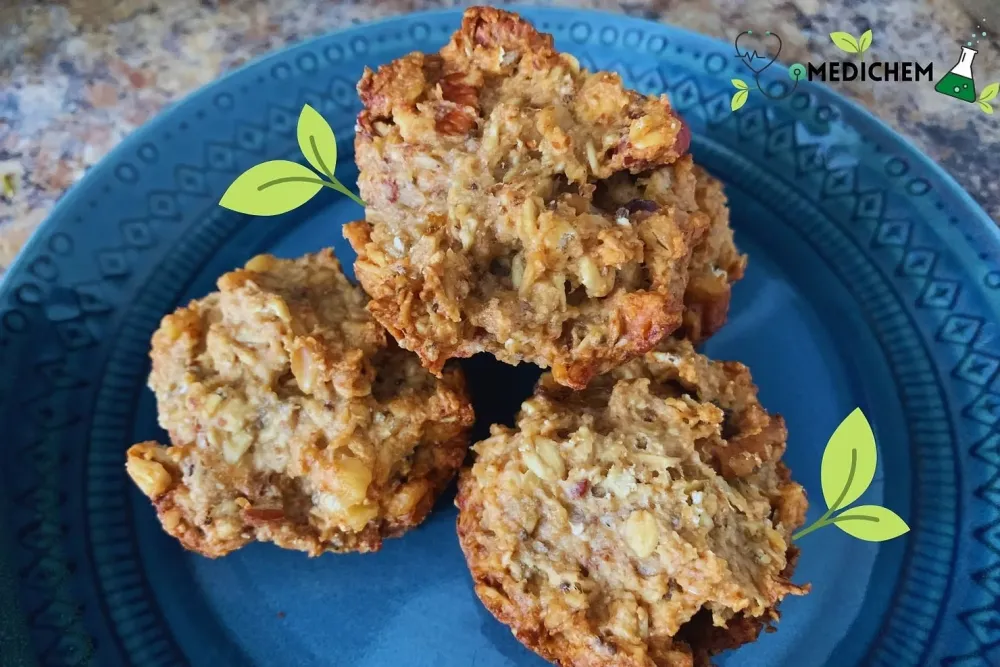
But as a plant-based nutrition nerd, there's one cookie recipe I keep coming back to again and again.
It's adapted from The No Meat Athlete Cookbook by Matt Frazier and Stepfanie Romine. (It's an excellent book, by the way! You can find it on Amazon here.)
The original name? Calorie Bomb Cookies.
Sounds even worse, right? Not just a cookie… but one bursting with calories?!
Calories are energy (and sometimes you need a lot)
The authors developed this recipe as fuel for ultra-long bike races, so they designed it on purpose to deliver a lot of calories.
It might surprise you that “calorie delivery” could be a food’s job description. If you look at food marketing and influencer reels, you might get the impression that calories are a bad thing. The number of diet products on the shelves would make you believe that the best amount of calories is zero.
But calories are literally just a unit of energy! When I worked as a chemist, we used them to calculate how much energy chemical reactions used or released, usually measured as heat. What you might not know is that your body is its own fantastic chemical laboratory, breaking down the molecules in your food to release the energy it needs to run. That energy is measured in calories!
Thinking back to our car example, calories are like the gasoline that keeps a car running.
Your body burns calories just to stay alive
Many people think calories are only what you burn during exercise. But the calories in our food don’t just keep us moving. They keep us thinking, breathing, digesting, and doing all the little things our bodies need to stay alive.
The minimum amount of energy your body needs to function at rest is called your basal metabolic rate, or BMR. It covers keeping your organs running, your skin healing, even your hair growing. Every little thing your body does just to exist needs calories.
One of the hungriest organs is your brain. Even though it’s only about 2% of your body weight, it uses about 20% of your energy at rest. That’s why brain fog or slow thinking might be one of the first things you notice when you’re running low on fuel.
All of that adds up to more than most people expect. For most adults, BMR alone is usually quite a bit more than 1,000 calories a day, before you take a single step. Add in digesting food and moving through your day, and most adult women need somewhere around 1,600 to 2,400 calories a day, and most men around 2,000 to 3,000.
Different cars, different tanks
Your BMR depends mostly on how big you are, your age, and your sex. How active you are gets added on top of that. Cars work the same way. Some have smaller tanks, some have bigger tanks, and some haul heavy loads and burn through gas a lot faster.
Seasons of life change the math too. If you’re pregnant or breastfeeding, your body is also passing energy along to the precious new life you’re growing or feeding. Different seasons and different contexts require different amounts of calories just to run normally.
So let's run the bike racers' cookie through our three questions.
What's its job? Calorie delivery.
Does it meet their needs? Absolutely. They were burning through fuel for hours and needed calories that were easy to eat, portable, and dense.
Compared to what? Sugary drinks and ultra-processed energy bars. These cookies got the job done while also providing nutrients from whole food ingredients.
For those riders, a calorie-packed cookie was the right tool for the job.
One recipe, many seasons
I may not be a long-distance athlete, but when I first discovered this recipe, Dr. Giomarell and I were regularly running together. We were both experimenting with plant-based eating and looking for something quick to refuel after a run and before work.
These cookies were:
- Free of the dairy and eggs that were triggering skin and digestive issues
- Easy to prep ahead
- More nutritious than a grab-and-go donut or sugary cereal
Years later, this same recipe became a staple during a completely different season of life.
After having two beautiful babies in two years, I was breastfeeding my newborn full-time while also wrangling my little toddler. In this context, it was a lifesaver to have a quick source of energy and nutrients that supported milk production (which takes roughly 400 extra calories a day!). And I could eat them with one hand!
They were also a favorite snack for Dr. Giomarell during 24-hour shifts in the emergency department. He could grab one between patients and it would keep him full longer.
How I've tweaked the recipe
Over the years, I've adapted this recipe to fit our needs better, always asking those three questions: What's it for? Does it match my needs? Compared to what?
Here's how I've modified it:
- Swapped coconut oil for canola or vegetable oil. Coconut oil is higher in saturated fat. Canola and vegetable oils offer more unsaturated fats, which may be a better fit for many people's heart health goals.
- Added more chia and flax. This boosts the fiber content and adds omega-3s.
- Used less brown sugar and swapped chocolate chips for pecans. A small way to cut added sugars while still offering something satisfying and rich.
Each of these changes was made with context in mind. Not to make the cookie "good," but to make it work better for us!
If you're working toward weight loss
Remember question two: does it meet my current needs? If your goal right now is weight loss, the answer shifts a little. Each of these cookies packs around 200 calories, and they're delicious, which means it can be easy to eat more than one!
If you're working toward weight loss or trying to stay in a calorie deficit (eating a little less energy than you burn), it helps to enjoy them strategically. That might mean planning for just one as a post-workout snack or pairing them with less calorie-dense foods throughout the day.
The good news is that these cookies offer more than just calories. Their higher fiber content can help you stay full longer than many store-bought treats. And because you're making them from scratch, you naturally become more intentional about eating them. Prepackaged snacks, on the other hand, are easy to overeat straight from the box.
There's no guilt required here. The more you understand your needs, the more freedom you have to enjoy what fits.
Try it yourself
Ready to make your own batch? I've renamed them Grab and Go Energy Cookies!
→ Grab my personalized version of the recipe here. It's free!
The recipe is exclusive to our email community, so you'll be asked to share your email before getting access. Once you're in, you'll get the full ingredient list and instructions. You can adjust the batch size with the slider, and you'll find all the nutrition facts in the nutrition tab.
And remember, you don't have to follow it exactly. I've made plenty of swaps over the years to fit our needs, and you can do the same! That's the beautiful thing about food: there are so many ways to make it work for your body, your schedule, and your preferences.
We're blessed to live in a time and place where we have options. So if one recipe doesn't quite fit, don't give up! Try something new, tweak what you've got, or explore a completely different idea.
So, is this cookie good or bad?
You already know what I'm going to say. It depends!
Think back to the healthiness scale. Next to a grab-and-go donut before work, these cookies slide toward the healthier end. For an ultra-cyclist, a nursing mom, or a doctor on a 24-hour shift, they were exactly the right fuel. For someone else, on a different day, they might land somewhere else on the scale.
Next time you catch yourself asking whether a food is good or bad, try the three questions instead: What's its job? Does it meet my needs right now? Compared to what?
Coming up next in Back to the Plate
Now that we've traded "good or bad" for "it depends," we're ready to zoom in. In two weeks, we'll tackle a question I hear all the time: what does "eating well" actually mean? (Spoiler: it has less to do with labels than you might think.)
The best way to catch every post in the series is to join our newsletter. You'll get each new post in your inbox, plus the recipes, myth-busts, and little check-ins we share in between.
You don't have to figure it all out alone. We're here to help!